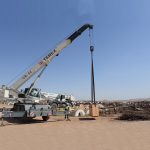
Richard Haddath, a registered Lifting Machine Inspector and MD of Cranemec Group S.A, believes diligent inspection of cranes can help ensure safe operation, minimise downtime, and manage repair costs. In this article, Richard offers Cranemec’s inspection recommendations.
Daily crane inspection may not be foremost in the operator’s mind, but it is a critical practice for work in any kind of condition. Mobile cranes provide the lift and reach capabilities required by a variety of applications, and proper inspection is an important part of keeping them safe and productive no matter what the working conditions.

Many crane maintenance and repair needs can be identified during frequent inspection and corrected timeously long before they cause safety issues, reducing equipment downtime, and failure. Operators and service technicians should carefully follow OEM’s manuals, standards and applicable regulations for their specific crane when operating, maintaining and inspecting the equipment.
A Competent Crane Inspection
Crane Inspections should be conducted by a “competent person,” which is generally defined as someone who is capable of identifying hazards and having the authority to take prompt and corrective action to eliminate them. The same recommendations apply to both Hydraulic and Lattice boom cranes as well as other lifting machines used for material handling e.g telehandlers, forklifts and mobile elevated working platforms.
Inspections that should be performed frequently include but are not limited to:
- All load charts, safety and warning labels, and control labels for being present and legibility.
- All safety devices for correct operation. The Rated Capacity Indicator/limiters shall be checked and tested before the crane is put into use each day or shift.
- Control mechanisms for leaks, cracks, and operation of all functions.
- Hydraulic system (hoses, steel tubing, fittings) for leakage and correct oil levels.
- Check the crane hook’s safety laches and operation. Look for any distortion or wear on the hooks as well as the hook swivel bearings.
- Wire ropes, check the complete length of the rope for wear and damage, make sure the rope fitted is of the correct construction for this crane, as per manufactures specifications.
- Connecting pins and pin retaining devices for proper engagement.
- Check the crane for any damage or missing parts, cracked welds and presence of safety covers; crane should be monitored for a short period during operation for abnormal performance;
- Electrical device for broken/ faulty as well as excessive deterioration, dirt or moisture accumulation.
- Lights and alarms are working and functioning correctly.
- If your crane is fitted with a remote-control unit, check that it is in working order and is functional.

The cost of overlooking these frequent inspection items can be significant in terms of safety, downtime and cost. A missing pin retaining bolt which may only cost a couple of Rands to replace could cause a load to drop resulting in expensive crane and property damage however more importantly, injures or fatality’s due to the unsafe lifting machines. If not repaired, cracks on the crane boom or carrier could spread to a point that the crane becomes unsafe to operate and, in some instances may lead to very expensive repairs or replacement. An oil leak or blown hydraulic hose could result in an oil spill which would lead to environmental problems.
If defective items are identified during inspections, the crane must be taken out of service until the necessary repairs or replacement part fitted. The OEM crane manuals should feature an inspection checklist and, in some instances, include a crane log book for recording inspections, load testing, maintenance, and repairs to help keep the crane in a safe and productive condition.
Additional crane inspections and service must be performed according to the manufacturers recommended intervals and the inspection, Load Test and Examination performed to the applicable regulation/standards. In most cases the inspections are undertaken every 6 months and the load test annually, both should be undertaken by a qualified Lifting Machine Inspector (LMI) each with their own specific check list of items.
With strict adherence to inspection guidelines and requirements starting with the daily, monthly, and yearly inspection will help ensure safe operation of the crane, minimise downtime and control repair expenses.
Cranemec Group S.A offer Engineering Council approved maintenance and inspection programs which cover in depth practical and theoretical training on most types of lifting equipment.